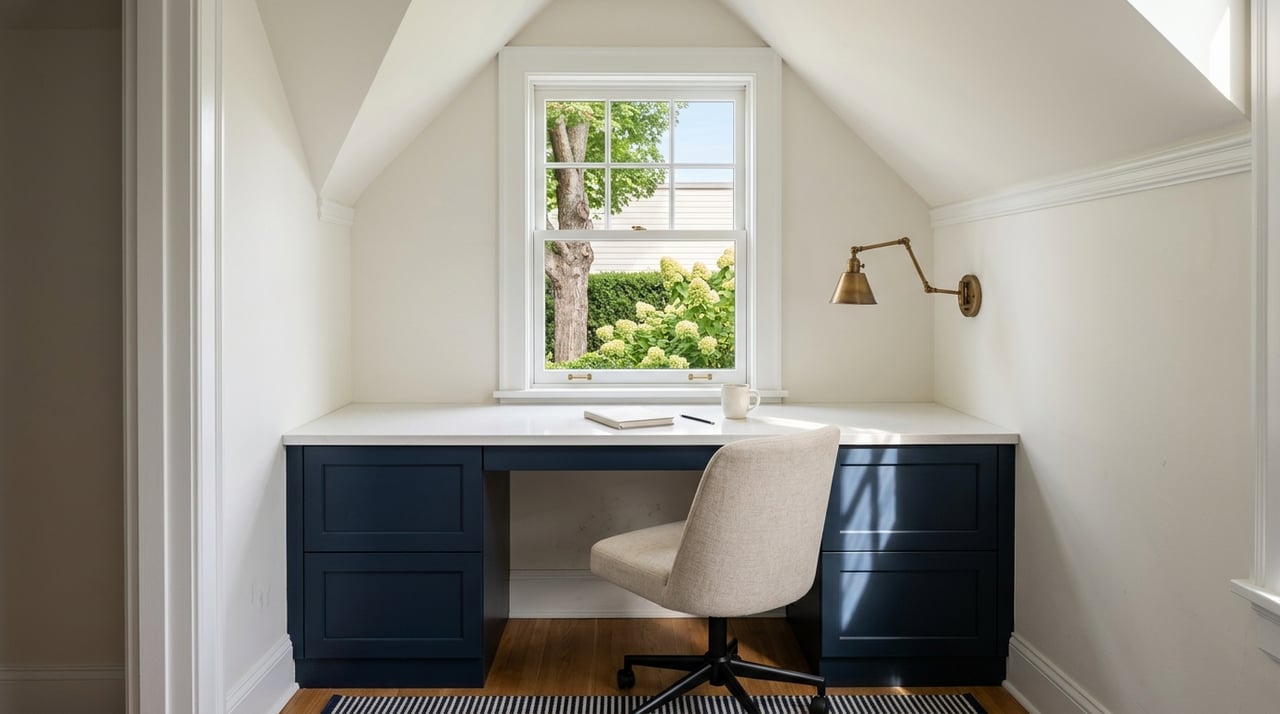
Remote work did not just change where you log in each morning. It changed what home feels like, especially in places like West Windsor where space, transit access, and daily lifestyle all matter. If you are searching here, you may be weighing a home office against a shorter drive to the station, or a larger yard against a higher price tag. This guide will help you understand how remote and hybrid work are shaping home searches in West Windsor Township and what to prioritize as you evaluate your options. Let’s dive in.
Why remote work matters in West Windsor
Remote and hybrid work are more than a national trend in Mercer County. The county’s 2024 labor profile shows that 14.8% of workers work from home, compared with 13.5% statewide. That makes work-from-home flexibility a real part of the local housing picture.
West Windsor also has the infrastructure that supports this way of living. QuickFacts show that 97.8% of households have broadband and 99.1% have a computer, which is important if your work depends on reliable internet and a strong home setup. The township also has a highly educated population, with 84.4% of adults holding a bachelor’s degree or higher, which helps explain why flexible work patterns show up so clearly in the local market.
At the same time, commuting has not disappeared. West Windsor’s mean travel time to work is 38.6 minutes, and the township notes that many residents work from home while still relying on Princeton Junction, Route 1, and nearby highways for regional access. In other words, buyers here are often planning for both home-based work and occasional travel.
What buyers want in a remote-work home
When you work from home, even part of the week, your priorities often shift. Instead of focusing almost entirely on commute time, you may care more about how the home functions from morning to night. That can change the entire search.
National research supports that pattern. Fannie Mae found that remote work, along with the desire for more space, changed housing demand and made many households more willing to commute farther or relocate. NAR’s 2024 Migration Trends report also found that recent buyers often chose homes for outdoor space, additional square footage, and quieter surroundings.
In practical terms, buyers are often looking for features like:
- A dedicated office or flex room
- A second bedroom that can serve as a long-term workspace
- A finished basement for work, hobbies, or guests
- Strong internet access throughout the house
- Storage and practical everyday spaces
- Outdoor areas for breaks and downtime
McKinsey notes that fast, reliable internet is critical for remote and hybrid workers and that work-from-home patterns can increase demand for larger homes with office-ready layouts. NAHB’s 2024 buyer preference research also points to the value of practical at-home living, including laundry rooms, storage, open floor plans, patios, porches, exterior lighting, and landscaping.
Why West Windsor fits hybrid lifestyles
West Windsor stands out because it offers a mix that many hybrid workers want. You can find suburban space and open areas while still keeping a connection to major job centers. That balance is one reason the township continues to appeal to buyers who do not need to commute five days a week.
Princeton Junction supports occasional commuting
For many buyers, the key question is not whether they commute daily. It is whether they can commute easily when they need to. NJ Transit lists Princeton Junction Station as offering parking, accessibility, and bike racks, and the Princeton Branch connects Princeton Junction and Princeton while linking into Northeast Corridor service to New York City, Newark, and Trenton, along with Amtrak service.
That kind of access matters if your schedule is flexible but not fully remote. You may only head into an office once or twice a week, but when you do, convenience still carries value. In West Windsor, that station access can make hybrid living more manageable without giving up the feel of a suburban home base.
Township planning reinforces the station area
The township has also planned around that convenience. West Windsor’s redevelopment page states that the Princeton Junction area was designated for redevelopment to help create a downtown for the township, with a plan covering roughly 350 acres that includes parking, vacant or open space, and retail, office, and industrial land.
For buyers, this adds useful context. It suggests that the station area is not just a commute point but part of a larger long-term vision for how people live, move, and connect in town. If you want occasional rail access without centering your entire search on a daily commute, that can be a meaningful advantage.
Open space has become more important
Remote work often makes the area around your home feel just as important as the home itself. When you spend more time nearby, access to trails, parks, and outdoor breaks can improve your day-to-day routine. West Windsor is well positioned on that front.
The township says it has about 50% open space and a strong park system. Its community page highlights preserves, trails, and recreation options, while the parks page describes West Windsor Community Park as more than 120 acres with a nature preserve, active recreation areas, walking paths, and picnic space.
That matters because outdoor space is not only a weekend perk anymore. It can be part of your workday rhythm, whether you want a lunchtime walk, a place to reset between meetings, or simply more breathing room close to home.
How remote work changes your search strategy
If you are buying in West Windsor, remote work may affect your search in ways that are easy to overlook at first. A house can look perfect on paper but function poorly once your workday starts. It helps to think beyond bedroom count and square footage.
Focus on function, not just size
A larger home is not always a better remote-work home. What matters is whether the layout supports privacy, noise control, and daily routines. A smaller home with a well-placed study or finished lower level may work better than a larger home with no clear workspace.
As you tour homes, consider where video calls would happen, how natural light affects a work area, and whether the home offers separation between work and personal life. Even a flexible nook, loft, or guest room can be valuable if it works well over the long term.
Think through internet and device needs
In a market where nearly all households have computers and broadband, expectations are high. Still, your own needs may be more specific. If two people work remotely or if your household relies on heavy streaming, conferencing, and cloud-based tools, you need a setup that can keep up.
It is smart to think about where routers, workstations, and charging areas would go. A home that supports daily digital life smoothly can feel far more livable than one with more square footage but less practical utility.
Weigh indoor space against outdoor relief
Many buyers feel torn between interior square footage and yard space. Remote work can make both more important. More indoor room helps if you need separate work areas, while outdoor space can make the home feel more balanced and restorative.
NAR’s migration research found that outdoor space was the top reason recent clients chose a home, ahead of additional square footage. In West Windsor, where parks, preserves, and open space are part of the local character, this tradeoff deserves careful thought.
Budget tradeoffs in West Windsor
West Windsor remains a premium suburban market, so priorities matter. Census QuickFacts show a median value of owner-occupied housing units of $776,400, and Realtor.com currently reports 123 homes for sale, a median sale price of $847.5K, and a median of 32 days on market. That means buyers often need to make clear, strategic choices.
One common tradeoff is location versus space. You may pay more for closer access to Princeton Junction, newer finishes, or a true office or flex room. Or you may decide a quieter section of town with more indoor or outdoor space better suits your work-from-home routine.
Another tradeoff is present needs versus future flexibility. A home that works for one remote worker today may feel tight later if your household grows, your schedule changes, or two people need dedicated work areas. Thinking a few years ahead can help you avoid buying too narrowly.
Questions worth asking during your search
Remote work has made home searches more personal and more practical. Before you make an offer, it helps to ask questions that reflect how you will actually live in the space.
Consider questions like these:
- Can a bedroom or bonus room function as a real office every day?
- How important is Princeton Junction access if you only commute occasionally?
- Would you rather have a larger yard or more interior workspace?
- Does the layout allow for quiet during calls or meetings?
- Will the home still work if your schedule changes in the next few years?
These are not small details. In many cases, they shape how satisfied you will feel with the home once the excitement of closing day has passed.
A local approach helps
Because West Windsor offers several different lifestyle advantages at once, the right choice is rarely about one feature alone. It is usually about the balance between space, convenience, setting, and budget. That balance looks different for every buyer.
A thoughtful search should account for how you work, how often you travel, and what kind of daily environment helps you feel productive and at ease. In a market where buyers are often spending close attention to both function and long-term value, local perspective can make the process much clearer.
If you are considering a move in West Windsor, Maura Mills can help you evaluate how each home fits your routine, priorities, and long-term plans with the kind of careful, local guidance that makes a complex search feel more manageable.
FAQs
How is remote work affecting home searches in West Windsor?
- Remote and hybrid work are increasing interest in features like dedicated offices, flex rooms, outdoor space, and layouts that support daily work at home, while still keeping access to Princeton Junction and regional commuting options.
Is Princeton Junction important for hybrid buyers in West Windsor?
- Yes. For many hybrid buyers, Princeton Junction offers useful occasional-commute access to New York City, Newark, Trenton, and Princeton without requiring a fully commute-centered home search.
What home features matter most for remote workers in West Windsor?
- Buyers often focus on reliable internet access, office-ready layouts, finished basements, storage, laundry rooms, and outdoor spaces that support both productivity and everyday comfort.
Is West Windsor a good fit for buyers who work from home?
- West Windsor offers strong broadband access, significant open space, a robust park system, and regional transit connections, which together make it well suited to many remote and hybrid work lifestyles.
What budget tradeoffs should buyers expect in West Windsor?
- Buyers may need to choose between station convenience, newer finishes, dedicated office space, and larger indoor or outdoor areas, since West Windsor remains a premium market with relatively high home values and sale prices.