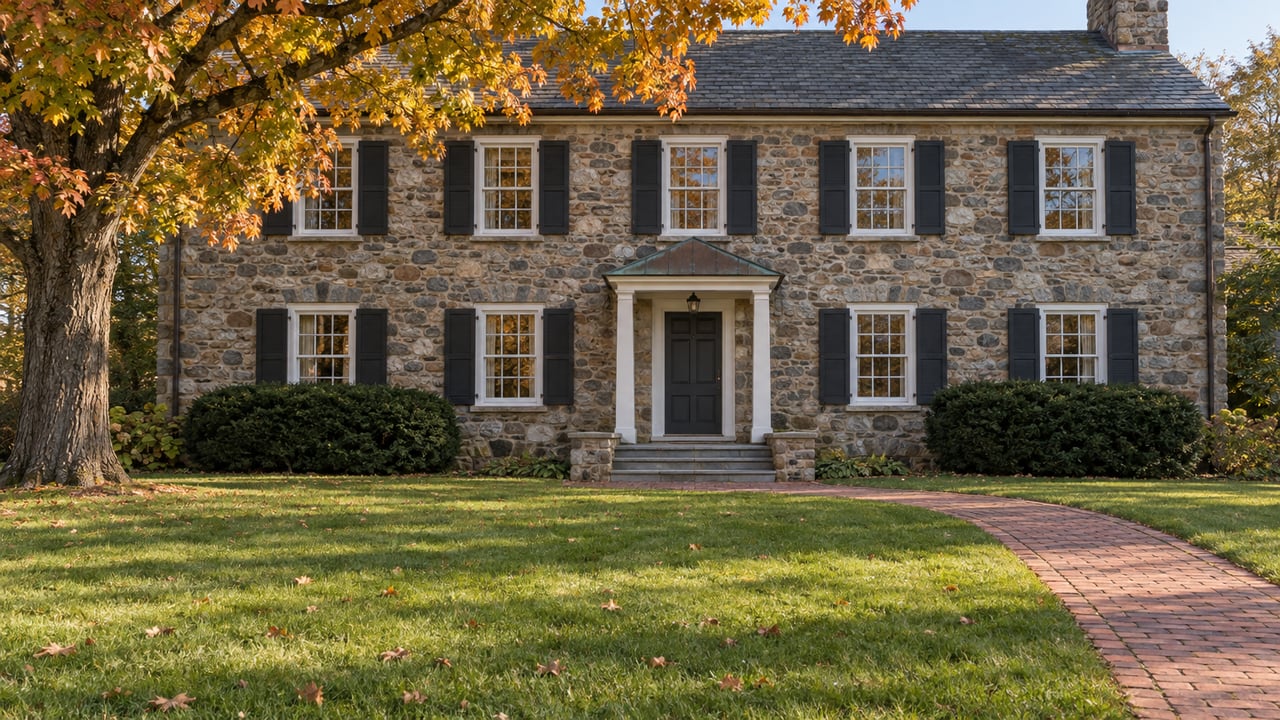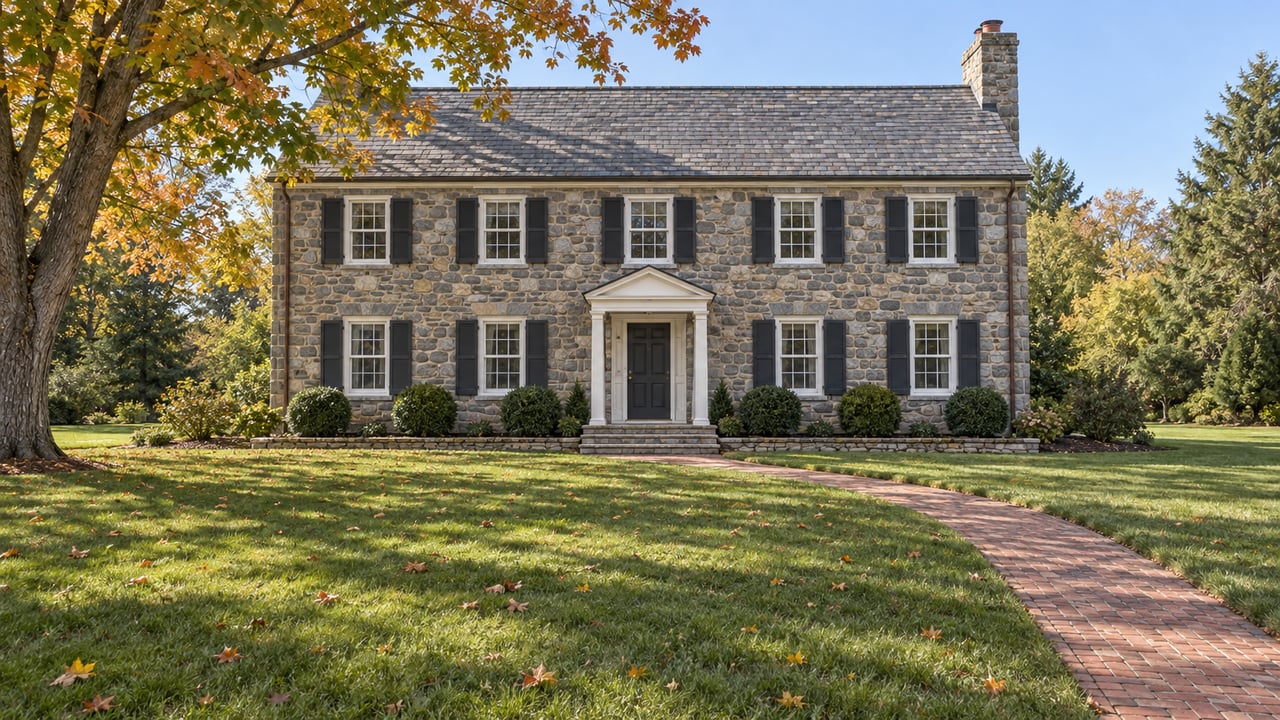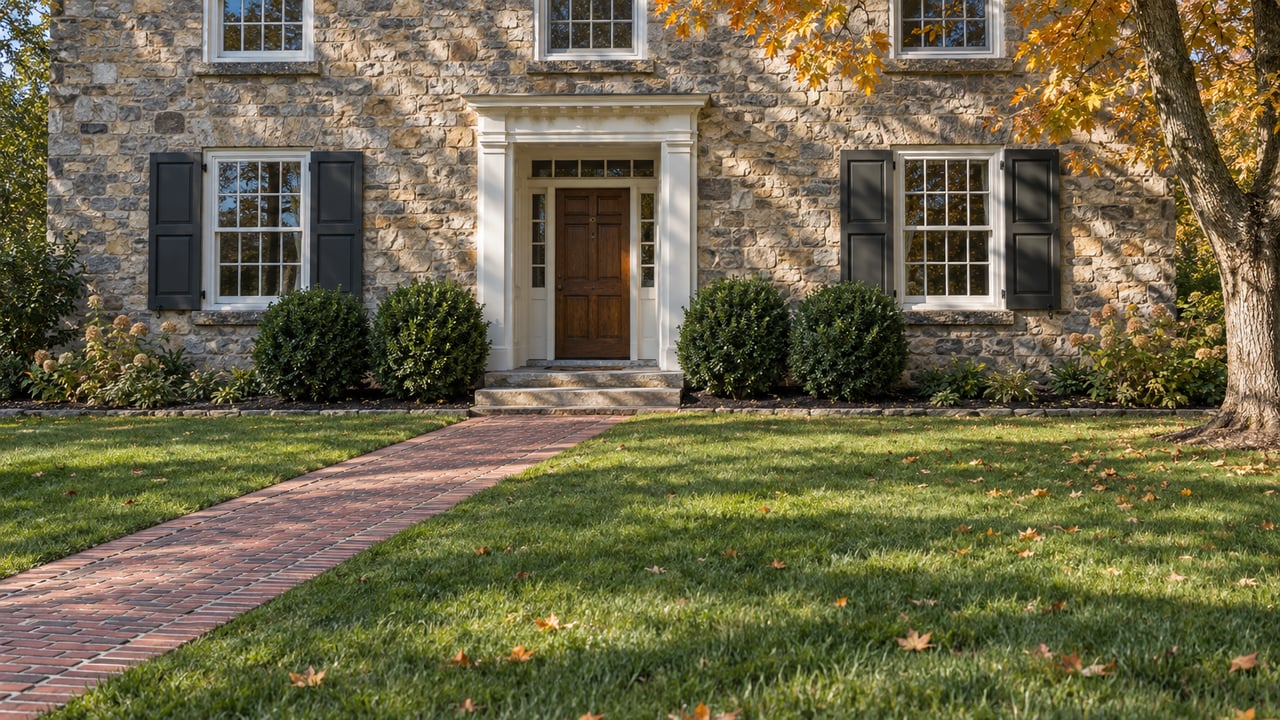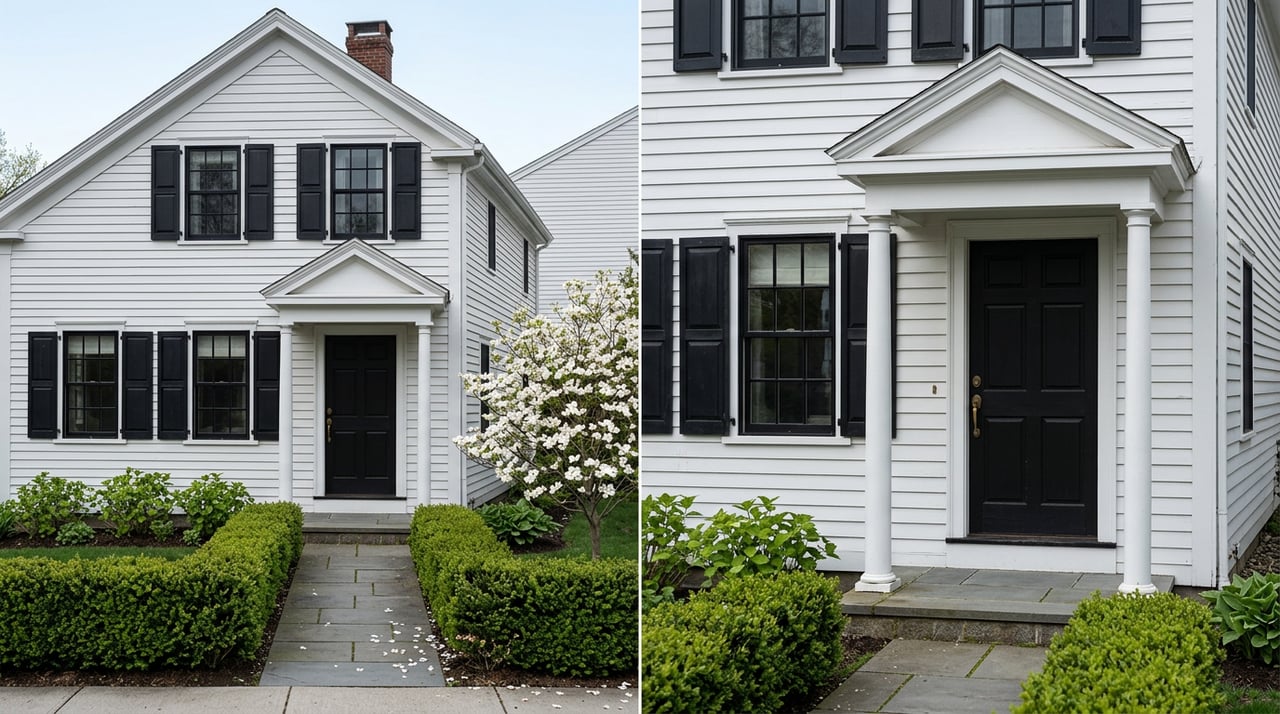
Here's a question worth asking before you fall for a listing photo: is this house actually in Pennington, or does it just have a Pennington mailing address?
Those are not the same thing, and the gap between them is bigger than most buyers realize. Search any national listing site for "Pennington, NJ" and you'll get a mix of two very different products stitched together by a ZIP code. One is the actual borough, a walkable, roughly 2,900-person town with Victorian-era homes lining Main Street. The other is a stretch of neighboring Hopewell Township that happens to share Pennington's post office and 08534 ZIP, but answers to a different town government, a different tax roll, and in many cases a homeowners association the borough itself doesn't have.
If you're comparing "Pennington" listings side by side and wondering why the numbers don't line up, this is why.
The ZIP code is doing two jobs
The United States Postal Service assigns "Pennington" as the accepted mailing city for ZIP code 08534. According to a public ZIP code reference, portions of 08534 also fall within Hopewell Township, along with slivers of Ewing and Lawrence Townships. That means a listing agent can accurately write "Pennington, NJ" on a property that has never been inside the actual borough limits.
This isn't a rare edge case. Some of the largest residential communities carrying the Pennington address, Brandon Farms and Hopewell Grant among them, sit entirely within Hopewell Township. So does the newest construction in the area right now: The Collection at Hopewell and Hopewell Parc, both actively marketing 2026 move-ins under a Pennington mailing address while their marketing copy also, accurately, calls them part of "historic Hopewell."
Same ZIP. Same postal city. Two different municipal governments, two different tax bills, and in most cases, two different eras of construction.
Why the township side got built this way
The reason Hopewell Township has this much subdivision-style housing wearing a Pennington address traces back to a specific legal fight, not a coincidence of geography. According to Hopewell Township's own public FAQ on its affordable housing history, the township was subject to a Builder's Remedy lawsuit in the 1990s after falling short of its state-mandated affordable housing obligations. The settlement that followed produced Brandon Farms, a development the township describes as having grown to more than 1,200 homes, built at a ratio of roughly eight or nine market-rate units for every affordable unit.
That single settlement reshaped the housing supply on the township side of the ZIP code. Brandon Farms alone covers 556 acres and includes roughly 1,293 total units across single-family homes, townhomes, and condominiums, built mostly between 1992 and 2000 by K. Hovnanian and Ryan Homes. It's the reason a buyer searching "Pennington" today can pull up a quarter-acre colonial from 1995 with a pool and clubhouse in the same results as an 1890s farmhouse two blocks from Main Street.
The building hasn't stopped. New signage and a new traffic signal at Ingleside Drive and Route 31, which went live in January 2026, are small but telling signs that this corridor is still absorbing growth, not just holding onto it.
What actually changes between the two
The differences aren't cosmetic. They show up in the numbers that matter most once you're under contract.
| Pennington Borough | "Pennington" address, Hopewell Township | |
|---|---|---|
| Governing town | Pennington Borough | Hopewell Township |
| Typical lot size | Roughly a fifth to a third of an acre, in-town parcel | Quarter-acre to several acres, depending on the community |
| Housing era | Largely pre-World War II | Mostly built from the 1990s onward, including active 2026 construction |
| HOA | Uncommon | Standard in most named communities, including Brandon Farms and Hopewell Grant |
| Distance to Main Street shops | Often walkable | Usually a short drive |
Property taxes tell a similar story, just with the specific numbers reset every year as each town certifies its own budget. Pennington Borough and Hopewell Township are separate taxing districts under Mercer County's Board of Taxation, which means they set their own rates, run their own assessments, and mail their own bills. A house with a Pennington address is taxed by whichever town actually holds the deed, not by the ZIP code on the envelope, and that town can be either one. The only way to know which applies to a specific listing is to ask, not to assume from the address.
School assignment is the one constant. Both sides of this ZIP code feed into the Hopewell Valley Regional School District, so that part of the comparison stays even. Everything else, from who plows your street to who sets your assessment, depends on which side of an invisible line your specific parcel sits on.
The median price trap
This same blending shows up in the headline numbers buyers usually check first. As of May 2026, one national tracker put the median list price for homes carrying the Pennington postal address at roughly $622,000. Other early-2026 snapshots landed in a similar $620,000 to $630,000 range. Those figures already combine borough Victorians and township subdivisions into a single median, which is the first layer of confusion.
The second layer is stranger. Some assessed-value tools estimate the median home value across the 08534 ZIP at closer to $420,000, a full $200,000 below the listing-based medians. That gap isn't a sign the market cooled. It reflects the difference between an assessed value, the figure a tax assessor uses and which is often set well below current market value, and an actual list or sale price. If you're using an online home-value estimate to gut-check a listing price in this ZIP code, know which kind of number you're looking at before you decide a house is overpriced.
Three things to check before you compare two "Pennington" listings
- Ask which municipality actually holds the deed, Pennington Borough or Hopewell Township, since that determines your taxing authority and local ordinances, not the mailing address.
- Ask whether the community carries an HOA. Most Hopewell Township developments built since the 1990s do; most in-borough properties don't.
- Pull the actual lot size and year built rather than relying on the neighborhood name. A "Pennington" address can mean an eighth-acre lot from 1890 or a half-acre lot from 2026.
Quick answers before you call an agent
Does a Hopewell Township address hurt resale value compared to the actual borough? Not inherently. The two products appeal to different buyers, in-town walkability versus subdivision amenities, and both have held steady demand. The comparison that matters is lot for lot and era for era, not ZIP code for ZIP code.
Will my kids go to the same schools either way? Yes. Both sides of the ZIP feed into Hopewell Valley Regional School District.
How do I confirm which town a specific listing is actually in before I make an offer? Ask your agent to confirm the taxing municipality directly from the tax record, not from the listing's marketing copy. It takes one phone call and it changes what you should expect on your tax bill.
If you're weighing a walkable in-town Victorian against a newer place a few miles out and both showed up under the same search, that's not a coincidence of the market. It's a quirk of how the postal service drew this particular map. Getting the distinction right before you write an offer saves you from comparing two homes that were never really in the same housing market to begin with.
If you'd like a second set of eyes on a specific listing, whether it's an in-town Victorian or a Hopewell Township community wearing a Pennington address, Maura Mills has spent more than three decades sorting out exactly this kind of local detail for Greater Princeton buyers. Request a Personalized Consultation to talk through what a specific address actually means before you make your next move.
This article is general information, not legal, tax or financial advice. Consult a qualified professional about your situation.