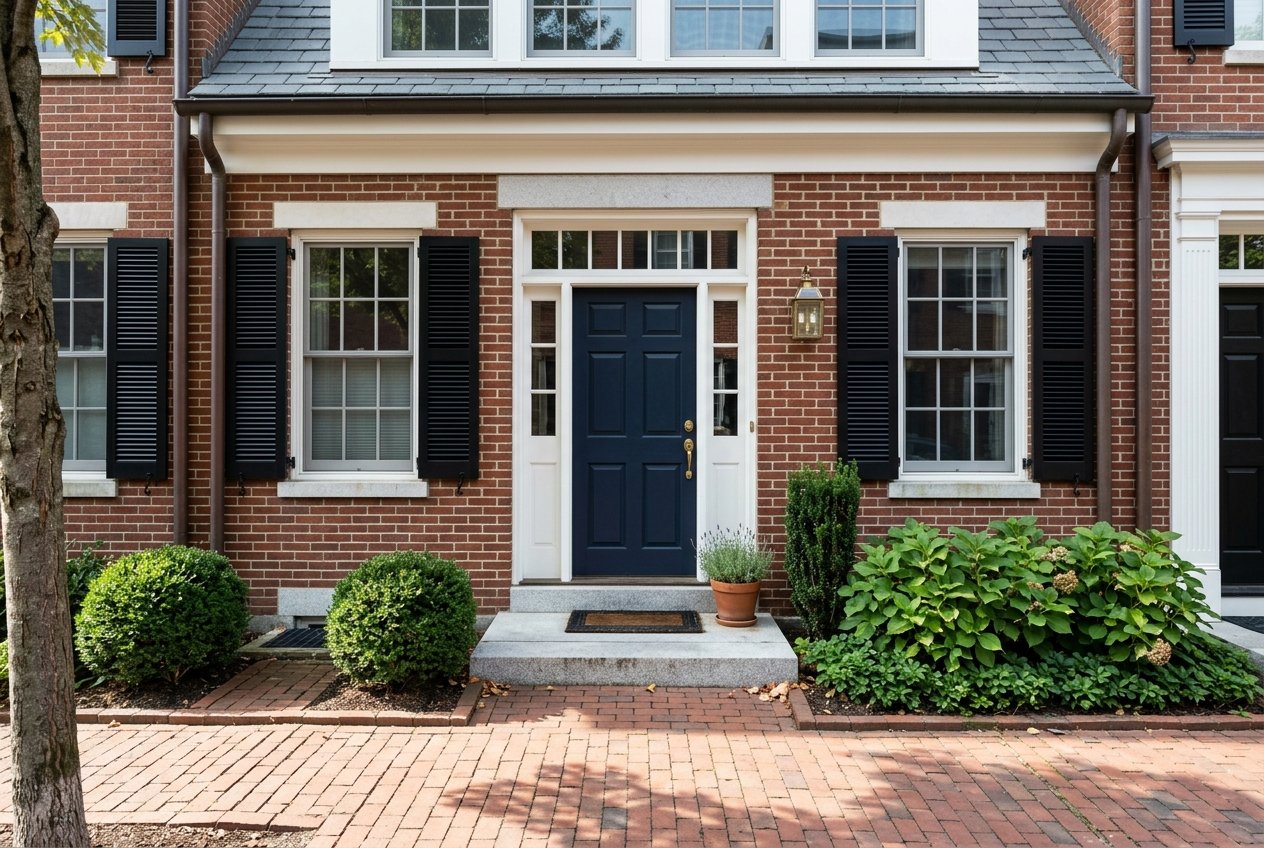
Looking for a home in Princeton without taking on all the upkeep of a detached house? Condo and townhome living can offer a compelling middle ground, especially if you want convenience, a more manageable footprint, and access to the parts of town you use most. If you are weighing whether attached housing fits your lifestyle, this guide will help you understand the tradeoffs, pricing, and practical details that matter most in Princeton. Let’s dive in.
Princeton Attached Housing at a Glance
Condos and townhomes make up a smaller share of Princeton’s housing stock than detached homes. Princeton’s consolidated housing plan estimated that 58.7% of the housing stock was single-family detached and 14.3% was single-family attached, which helps explain why attached homes can feel limited and competitive when they come to market.
That smaller supply exists within a high-value market overall. Census QuickFacts places Princeton’s median value of owner-occupied housing units at $1,050,600 for 2020 to 2024. In practical terms, that means condos and townhomes here are often not an entry-level shortcut, but a different style of ownership in a premium location.
Current listing snapshots support that pattern. Recent market data shows 18 condos for sale at a median listing price of $880,000 and 54 townhouses for sale at a median listing price of $1.29 million. Even attached housing in Princeton often carries a substantial price tag.
What Princeton Condos and Townhomes Look Like
In Princeton, attached housing comes in a fairly wide range of sizes and layouts. Recent condo listings commonly fall in the 2-bedroom, 2-bath range at roughly 1,200 to 1,600 square feet, while townhouse listings range from about 1,334 square feet with 2 bedrooms to 4-bedroom homes of about 2,554 square feet.
That range matters if you have ruled out attached living because you assume it means sacrificing too much space. Some Princeton townhomes offer room for a home office, guest space, or flexible living areas, while some condos are designed for a simpler, lower-maintenance lifestyle.
Features can also be more robust than many buyers expect. Recent listings have included eat-in kitchens, dedicated offices, sunrooms, private yards, garages, and community amenities such as pools or bocce courts. In other words, attached housing here can still feel substantial and comfortable.
Why Buyers Choose Condo or Townhome Living
For many buyers, the biggest draw is convenience. If you want less exterior maintenance and easier day-to-day living, a condo or townhome can be appealing compared with a detached property that may require more upkeep, more landscaping, and more hands-on maintenance.
Location is another major reason buyers focus on this category. Some of Princeton’s attached housing is closely tied to downtown living, where you may be near Nassau Street, Palmer Square, and a broader mix of shopping and services. If you value being able to get out and enjoy town more easily, attached living can support that goal.
This housing type can also suit people in transition. Relocating professionals, downsizers, and buyers who want a more lock-and-leave lifestyle often find that a condo or townhome aligns better with how they actually live.
Downtown Princeton Appeal
If your priority is being close to the center of town, attached housing often deserves a close look. Palmer Square describes its residences as townhomes and condominiums in the heart of downtown Princeton, and the mixed-use district includes 224 residential condominium units alongside retail, office, and hotel uses.
That setting can shift your daily routine in a meaningful way. Princeton’s downtown guide identifies Palmer Square as the heart of downtown and Nassau Street as the main commercial street, with additional shopping at Princeton Shopping Center and Quakerbridge Mall. For some buyers, being in or near that environment is the main value proposition.
A downtown location does come with practical questions. Parking, guest access, and the balance between convenience and privacy can vary significantly from one building or block to another. That is one reason why property-level due diligence matters so much with condos and townhomes.
Amenities and Lifestyle Tradeoffs
Some attached communities in Princeton focus heavily on service and amenities. Princeton Windrows, for example, offers apartments, villas, and two-story townhomes, with villas that include attached one- or two-car garages and private decks or patios, and townhomes with more than 2,000 square feet.
The broader lifestyle package can be a deciding factor. Windrows also advertises housekeeping, routine maintenance, snow removal, an indoor pool and Jacuzzi, a fitness center, dining rooms, walking trails, transportation, tennis and pickleball, and regular social and cultural programming.
That said, amenities are never free. The more a community maintains or provides, the more important it becomes to understand the monthly costs and exactly what those costs cover. In Princeton, the real question is often not just whether a home has amenities, but whether you will actually use them enough to justify the expense.
Understanding HOA and Ownership Details in New Jersey
When you buy a condo or townhome in Princeton, the monthly association fee is only one piece of the picture. New Jersey regulates common-interest communities through the Department of Community Affairs’ Planned Real Estate Development program, and the state says developers of condominiums, cooperatives, and other association-governed common-interest communities must register an offering plan before units are sold.
Ownership structure also matters. The state notes that townhouse developments can be treated as fee simple when the association has no residential-building maintenance responsibility, while developments where the association maintains building-related common areas may be handled differently for inspection purposes.
For you as a buyer, the practical takeaway is simple. You will want to confirm exactly what the association maintains, whether the property is fee simple or condominium ownership, and how the community handles exterior elements, amenities, and parking. Those details shape both your monthly costs and your day-to-day experience.
Parking, Transit, and Getting Around
One of the strongest arguments for condo and townhome living in Princeton is access. Princeton’s municipal transit page says the Loop Local serves housing locations, downtown Princeton, and the Princeton Shopping Center, while the Loop Express runs between the Princeton Rail Station and the shopping center.
There are also broader transit options. The same municipal page says NJ Transit 605 connects downtown, north and east neighborhoods, Princeton Shopping Center, and beyond, and TigerTransit is free and open to the public. Princeton also notes that nearly 15% of working residents walk to work, which speaks to the appeal of a more connected, car-light lifestyle.
Regional travel is another plus. Princeton’s official site says the municipality has quick connections to Route 1, the New Jersey Turnpike, and the Garden State Parkway, and that Amtrak and NJ Transit provide direct rail service to New York City and Philadelphia. Princeton Station’s Dinky train links to Princeton Junction as part of that network.
Parking, however, still matters. Princeton says downtown metered parking is regulated by time of day, the Spring Street Garage has 485 public spaces, residents can apply for municipal and on-street permits in certain areas, and some former Borough streets have overnight restrictions from 2 a.m. to 6 a.m. If you are buying an attached home, you should verify deeded, assigned, guest, and permit-based parking before moving forward.
Price Expectations and Entry Points
If you are hoping attached housing will always cost less than a detached home in Princeton, it is worth setting expectations early. Based on current market snapshots, condos and townhomes still command premium pricing, especially when they offer strong locations, larger floor plans, or attractive community features.
There are some narrower entry points, but they are specialized. Princeton Windrows currently advertises a 3-bedroom, 3-bath townhome at $425,000, though it is part of an active-adult community. Magnolia Square also has a current affordable for-sale townhome opportunity, and the municipality says applicants must complete a preliminary application and join the homeownership waiting list by August 5, 2026.
This is one reason local guidance matters. Two attached homes may both be called townhomes, yet differ significantly in ownership structure, fees, age restrictions, location, and long-term value proposition.
Ongoing Development and Future Supply
Princeton’s attached-housing inventory is not fixed. The municipality says the Avalon Princeton Circle redevelopment includes 221 homes in apartment buildings and townhouses, which shows that attached inventory continues to be added through redevelopment.
That does not necessarily mean abundant supply. Because attached housing remains a relatively smaller segment of the local market, new development can help, but demand may still stay steady when buyers prioritize convenience, reduced exterior upkeep, and access to town amenities.
For buyers, that means timing and preparation still matter. If you have a clear sense of your priorities, you are better positioned to act when the right property becomes available.
Who Condo and Townhome Living Fits Best
Attached housing tends to work best if you value convenience over lot size. Buyers who want a smaller footprint, less exterior maintenance, and proximity to downtown or transit are often the strongest match for Princeton condos and townhomes.
It can also be a smart fit if you want to simplify without leaving Princeton. Downsizers may appreciate a maintenance-light setup, while relocating professionals often value in-town access and easier commuting options.
It may be less ideal if your top priorities are a large private yard, minimal association oversight, or the lowest possible monthly carrying costs. In Princeton, attached living is usually a tradeoff, not a bargain category.
What to Check Before You Buy
Before you make an offer on a Princeton condo or townhome, it helps to focus on a short list of practical questions:
- What does the HOA or association fee cover?
- Is the ownership structure condominium or fee simple?
- What are the rules around exterior maintenance and repairs?
- How is parking handled for owners and guests?
- Are there any age restrictions or occupancy requirements?
- Which amenities are included, and which cost extra?
- What are the expected monthly carrying costs beyond the mortgage?
- If school assignment matters to you, what is the assignment for this specific property?
For school-related planning, it is important to verify details for each address. Princeton Public Schools is the local district, but exact assignment depends on the property. Buyers should confirm district and school boundaries directly for any condo or townhome they are considering.
A Thoughtful Approach Pays Off
Condo and townhome living in Princeton can be an excellent match if you want lower-maintenance ownership without giving up location, comfort, or access to town. The key is understanding what you are gaining, what you are trading off, and how each community handles the details that affect daily life.
That is where careful local guidance can make the search much clearer. If you want help comparing options, understanding pricing, or evaluating which Princeton attached-home communities best fit your goals, Maura Mills can help you move forward with clarity and confidence.
FAQs
What is the difference between a condo and a townhome in Princeton?
- In Princeton, either property type may be part of an association-governed community, but the ownership structure can differ. In New Jersey, some townhome developments may be fee simple if the association does not maintain the residential buildings, so you should confirm the legal structure for any property you are considering.
Are Princeton condos and townhomes more affordable than detached homes?
- Not always. Current market snapshots show Princeton condos at a median listing price of $880,000 and townhouses at a median listing price of $1.29 million, so attached housing is often still premium-priced.
What do HOA fees usually cover in Princeton condo and townhome communities?
- Coverage varies by community. You should review exactly what the association maintains, including exterior elements, common areas, amenities, parking, and building-related responsibilities.
Is parking difficult with condo and townhome living in Princeton?
- It depends on the location and community. Downtown parking is regulated in several ways, and some areas have permit rules or overnight restrictions, so you should verify owner and guest parking rights for each property.
Are there townhome options in Princeton for buyers seeking lower entry prices?
- There are some niche opportunities. Current examples include an active-adult townhome at Princeton Windrows and an affordable for-sale opportunity at Magnolia Square, both with specific eligibility or community conditions.
How do I know if a Princeton condo or townhome is in the local public school district?
- Princeton Public Schools is the local district, but exact school assignment depends on the property. You should confirm district and school boundaries for the specific address before making a decision.